….here’s part (vi) from Chapter 3 of the Open Door of Emptiness… a gift for Valentines Day!
Just scroll down to the last recording on the linked page…
Simply Being (South West)

….here’s part (vi) from Chapter 3 of the Open Door of Emptiness… a gift for Valentines Day!
Just scroll down to the last recording on the linked page…
That’s an interesting question…for dharma practitioners…!
There is a story we can tell ‘about’ it…but what did actually happen? Was it ‘real’?
Here’s some of the story of aspects behind the scenes…
From the club being wound-up with debts of half million pounds in 2020…rising to the match last Saturday when….despite being 117 places below them in the league…they beat last season’s F.A. cup-winners 2: 1
Macclesfield Town’s football team, the ‘Silkmen’, have risen like a phoenix from the ashes!
Having retained the family feel of football clubs of the past… and succeeding, with enthusiasm drive and talent…the club members and fans were jubilant at this result…running onto the pitch and hoisting aloft Paul Dawson, one of the goal scorers.
Just twenty-five days before this match one of their most talented young players, who seems also to have been an all-round lovely person, aged 21… was killed in a car crash returning from a match…and the club is still in mourning…
Manager John Rooney said ‘It puts life into perspective… seven days before, he scored a goal for us, and seven days later he’s not here any more. It’s the saddest thing I’ve ever been involved in.
The match against Crystal Palace is a massive occasion, but it is a game of football at the end of the day.
We want to perform all of the time, but there are bigger things out there than just a game of football.’
So well said…so poignant is this life, and no-thing is certain.
His team mate Danny Elliot said that they assumed ‘he’d have fifteen years or so of F.A cup runs ahead of him…. but life has strange ways of not being what you think it might be’…Indeed it has!
When goal-scorer Paul Dawson was just three years old …James Low came up to Macclesfield and started to teach a few of us in the way his teacher had asked him to…starting at the top, and in a way that helps them (us) get the point.
While players were playing at home in the Moss Rose ground ‘the emotional epicentre of Macclesfield, which radiates a unique charm that fans across the country envy’ ! : ) – or away…an increasing number of dharma-fans gathered once or twice a year to sit and listen to James teach.
His teachings… over the ensuing twenty years…have given us the opportunity to engage with the great depth and breadth of the dharma that he offered.
The topics he has covered are wide ranging… yet are accessible on some level to anyone with interest …and are listed here.
These teachings are, for the many of us who do so, a joy to listen to…
It can be such a blessed relief to hear someone who actually knows ‘how it is’, and can explain how we also might see more clearly… having devoted much of his life-energy to transmitting what can truly help us… in different ways.
This listening can in itself act as a soothing massage…but there is such a lot of nourishment in the talks that will only become available to us through our own careful and reflective mastication!
A thought arose to bring these teachings to wider attention and deeper engagement…and a format for this has now emerged.
Each of these talks was recorded…these recordings have been transcribed, so transcripts are also available on the Simplybeing.co.uk website… Audios>Retreats> England>Macclesfield…(reading as well as listening is valuable)…and for most talks there are also video recordings you can watch.
The idea is to study each talk for a month then meet together to discuss, check and discover more through engaging with others in the group.
James’ advice for studying is… ‘perhaps listening for half an hour at a time then reflecting…’ and in our weekly group, sharing could be helpful.
Slowing down enough to engage in this way may not be easy… but it will allow for deeper perfusion and absorption than just allowing the talks to flow over us…one after another… as I did for many years : )
To give some sense of the listening time required for this… the talks are much the same in length, the first is about 300mins long…so that’s ten sessions of 30 minutes of listening time plus reflecting time ..so maybe ten hours a month?
That might seem a lot…or not… but maybe puts into question where does true value lie?
How much of this life’s time is being invested in the, inherently unsatisfying, transient..?
The average time spent on smartphones per day seems to vary from between three and a half… and five and a half hours a day. Mid-way between, at four and a half hours, is one whole day per week…
The meetings will be on the third Sunday of the month between 4pm and 6pm UK time
James suggested that we try ’45 minutes in groups of 3… then 30 minutes together with you for questions and discussion, then another 45 minutes in another 3 reflecting on how they could apply their learning in everyday life.’… so we can give that a go!
The first meeting… on the talk ‘The View of Dzogchen’… will be on 15th March, so happily there’s more than a month from now to begin to become acquainted with this profound view…
As, I think, Suzuki Roshi said ‘the most important thing is to find out what is the most important thing’… and through engaging with these teachings we have a chance to open to this most important ‘no-thing’
If you are interested in coming to the monthly meetings, or have any questions… let me know via the ‘Contact Me’ form…(top right)
Please add a sentence or two that shows… eg by addressing me by name, including your name.. referencing the meeting date, title of the talk…that you are not a robot!
…and last but not least…may all our studies and practice go well… for the benefit of all….

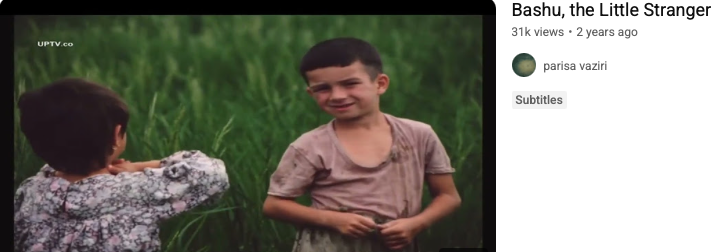
This film, released in 1987, won the classics section at the Venice film festival last year.
It was written and directed by the Iranian … Bahram Beyzai, who died just after Christmas this year.
He also wrote plays…was a master of Persian literature, mythology, and Iranian studies…and did much else besides!
About half a century ago in a big London teaching hospital I asked a lady if she could find a patients’ x-rays for me. She wrote down the details on a pice of paper and I was amazed at the beauty of what appeared from her pen …she explained that it was Persian script…
I haven’t watched a film for a long time, perhaps this was the link that made me write down the name of the play when I heard of Bahram Beyzai’s death on the radio…
I am glad that I did… and maybe you’d also find it a very heart-opening experience…
You can watch the entire film on YouTube.
I don’t like to know much about the details or what others have seen in a film, play, place or whatever, beforehand…so I can see it freshly…but to know that the people of the south are generally of much darker skin colour than the north was helpful in understanding some of the reactivity that Bashu encounters…and to know that the language each area uses at home is very different… was helpful.
The film reveals itself …no doubt uniquely to each of us, through our conceptualising lenses, filters… mood attention and so on … and perhaps more universal themes emerge the less clearly the film is pinned in time and place.
If you’d like to read more about it afterwards [or before ] here is a very sensitive, perceptive and appreciative in-depth review by Bijan Tehrani
There is a sangha film-club started by Ben Goddard and others…which offers the opportunity to meet together and discuss a film, exploring with and through others eyes and dharma perspective…
Do get in touch with him if you are interested… …. through connectivity and openness there’s so much that can help facilitate the widening and deepening of our narrowed views…
Praying in these turbulent times for naturally occurring bodhicitta to arise in the minds of those in Iran and all beings caught up in the suffering of samsara…so may all be free of aversion to enemies and strangers and clinging to friends and relatives..
The dharma offers us the deepest and most profoundly healing invitation…to look and keep looking…
until we are able to relax out of our fascination with, and absorption into, the movements of the mind as if they held inherent truth…
into the unconpounded, ungraspable basis for those movements… the underlying ground and truth of each and every ‘one’…
We can use the different dharma lenses offered by the teachings to open ourselves up to different perspectives, as to how the world is and we are. Views which range from rather to radically different from that offered by our self-absorbed myopia, help us examine our fixity, putting into question the validity of the basis of our assumptions and beliefs…
Are the opinions that we hold about ourselves, others, and the world… the actual truth of how it is?
Are we a knowable entity, an independently self-existing… individual ‘thing’?
Our ‘ego-self’ would like to think so…but then…what exactly is this ego-self?
And how and why does this aspect attempt to assume definitional mastery over every other ‘thing’ by, in some way, labelling?
Is it the whole.. and truth… of us?
And fundamentally…if we rely on what we take to be ‘our’ thoughts feelings and sensations to tell us the answers to these questions, to tell the truth about everything…is that wisdom or ignorance?
Without encountering the dharma…would we ever ask these questions?
Without the teachers and teachings would we find the answers… all on our ‘owney-o’ ?
We are so lucky to have so many different teachings, explained and available…to help us release from our delusions. Different aspects of these will be helpful at different times…and they will reveal themselves differently to us as we continue to engage with them.
Exploring the teachings an relating to them we find our own unique and wiggly way to unfold…
Mine has relied heavily on the teacher and teachings in the Macclesfield Talks for the education, which in the true sense of the word, I lacked.
I’ve worked on and with many of them over the years and so was able to checking a query about the abrupt ending to Talk 3 Anxiety and Doubt.
My copy ends the same way… so I checked with Chris Coppock who made, and has many of the early recordings … unfortunately there was a hiccup, and the ending was not recorded.
Checking that out was a bit of an obstacle course… but I then found myself listening again to Talk 15 Balancing relaxation and effort in Buddhism with its wonderfully rich invitation to explore how our off-balancedness comes about, can be recognised… and resolved in the true balance of the middle way…
I wrote a post recently about balance, referencing Weebles … this talk takes it much broader and deeper.
I think listening to it would be helpful, and enjoyable… for those who are meditating on Sunday (or any day) to engage with ….taking your time to feel your way home : )

Maybe, like the snail, you’ll find some older older invitations… including some simple prayers… if you look below…
It’s good to be alive, to be able to breathe, to be able to pray, to be able to practice the dharma.
The compassion which arises from wisdom, like wisdom itself, is not something artificial, so not something we can construct by our efforts.
But we can use many methods to soften our sense of being an isolated, separate self… and bring ourselves into a more healthy orientation with those we see as ‘other’…a deconstruction of our ego-centrality…it’s all about me, mine, and my opinions.
Prayer is one such method… done with full attention the ever- present connection is energetically illuminated.
Then sitting up in bed I would say the Four Immeasurables prayer….
then some meditation before getting out of bed…a good start to the day!
1.
May I be full of loving-kindness
May I be well
May I be peaceful and at ease
May I be happy
2.
May all beings be happy, content and fulfilled
May they be healed and whole
May all have whatever they want and need
May they be protected from harm
and free from fear
May all know inner peace and ease
May they be awakened, liberated, free
May there be peace in our world
and throughout the universe
Variations on similar lines say would be:
May no sentient being be unhappy, malicious, or ill,
neglected or despised;
and may no one be despondent
and:
Courage to the fearful,
freedom to the enslaved,
strength to the week,
mutual affection to all sentient beings
( that’s a prayer from Shantideva’s writing of the Bodhicaryavatara ’the way of the bodisattva ‘)
3.
The Four Immeasurables prayer that we say in the group goes like this:
May all beings be happy and know the root of happiness (love)
May they be free from suffering and cut the root of suffering (compassion)
May they abide in happiness free from suffering (joy)
and may they be free from aversion and clinging – feeling close to some and distant from others (equanimity)
A full explanation of the profundity of this prayer is to be found in macclesfield audio talk 10
An alternative with the same meaning is:
May all sentient beings be free from aversion and clinging,
feeling close to some and distant from others
May they win the bliss that is specially sublime
May they find release from the ocean of unbearable suffering
and maybe they never be parted from freedom’s true joy
In this way we can begin every day with the wish to devote it to the good of all living beings,
to bring peace and ease into every situation we encounter,
to be able to develop the spaciousness and qualities – the wisdom and compassion – required to fulfil these wishes.
That should keep us going for a bit…!
If you later wish to take refuge… (i.e. step on the Buddhist path) and take the bodhisattva vow
there is a brief daily meditation practice (these are the foundational practices from a Buddhist perspective)
and much more!
Just let me know if anything doesn’t make sense and we can talk it through
…but also, if you keep an eye on the Simplybeing.co.uk website Homepage and also Events you will see there is more activity and suggestion coming from James as to how orientate yourself, to be most at ease in and able to work with this particular situation in which we find ourselves operating…
Here is the link to that prayer.
The words in the translation wish for all beings to have happiness and the cause of happiness…
To be free of sorrow and the cause of sorrow.
Following James’ talk in Macclesfield this year i have changed the words above that to those he used: wishing ‘for all beings to know the root of happiness’ and ‘for them to cut the root of suffering’.
I have been thinking about appointments and disappointments, expectations and assumptions…. so whether you are new to the group or an ‘old hand’ I would ask you to read chapter 15 in the book Simply Being by James Low as I think it is important to explore your own expectations about the Dharma and how it is taught.
Just as a student cannot be known and labelled judged and discussed as if they were a thing, so neither can a teacher.
It’s wise to check a teachers credentials and important find out if there is a connection and whether you learn anything from them. Later, if issues arise which cannot be integrated then it is appropriate to raise this directly with the teacher. Friends will often confirm each others assumptions or opinions, and then what started out as a thought can end up as a ‘solid definition’.
If the student is disappointed with the teacher, or the teacher disappointed with the student, this means that one party has made an appointment for another to behave in a particular way, and an expectation has formed which has not been met.
Expectations are usually based on assumptions formed from past experiences mixed with imaginary hopes or fears, yet these can be taken for granted as self-evident truths. ‘You should be this… or you should not be….!’
Whether you are practising with a hinayana view, a mahayana view, or that of a non-dharma practitioner then a teachers behaviour will not always fit your frame of reference. This may trouble you but does not necessarily mean that an error has occurred. However if they should get a bit lost, and teachers are finding their way too, an apology should be forthcoming.
The dharma is very precise, as a medicine it has been used, tested and proven to be effective over thousands of years. However, as with contemporary medicine where only fifty percent of chronically ill patients take the prescribed medicine correctly, students can forget to take it, double the dose, mix it with other things or apply it incorrectly. Whilst the dharma teachings are the antidote to the ills of samsara the patient has to both trust the doctor and take the appropriate medicine regularly for it to work.
Others will have more facts at their finger tips and surely greater teaching skills but I have been given validation, within a lineage, to teach hinayana mahayana and vajrayana buddhism, including dzogchen, by someone who has full authority to do this. If you are unsure about this then you can check with me or with James Low. At the very least, this should mean that you have confidence that from the dharma point of view there is sufficient realisation and understanding to teach, and that I can be trusted never to be malicious.
Amendment July 2023 – This post was written getting on for a decade ago … at a time when Iassumed that lineage authorisation flowed through James automatically with what I had beenencouraged to do and realised.This assumption was incorrect, there is more to it than that…exactly what I do not know : )He has since clarified my rôle as a facilitator.
I have also completed the Bangor mindfulness teachers training course…this kind of mindfulness is derived from one of the eight stages of the Noble Path practised in the Hinayana view.
At times i can be teachery and sometimes even preachery but i am also in the process of change!
When the recluse speaks much ’tis on and of “the Way” (zen saying) …
They criticise when he says too much
and when he says too little…
and when he does not speak (the Dhammapada)
So…it’s genuinely hard to strike the right balance.
But whatever occurs, the Dharma speaks of the truth of impermanence and dependent co-origination (on the basis of this, that arises) so any opinion, view, situation or behaviour is transient and contingent. Learning how to teach is a process and hopefully my skills will increase with practise. James Low teaches in a very different manner now from that which he employed twenty years ago..
So for students all this invites examination of the assumptions they hold about the dharma and the teacher.
In your opinion should the good teacher leave you to travel at your own pace or encourage you?
Should they be always sympathetic and understanding and never challenge your views?
Should they be kind and gentle or a bit rough and acerbic?
Do they have rules to follow?……
A good teacher will do what’s appropriate – this will vary…their function is not to fall asleep with you but to help you wake up.
I wrote a verse which relates to this
What we can do with super glue!
Identity is a CV— a story used to limit me, which stunts my creativity.
If you stick stories onto me you’ll make a shape which seems to be a person of ‘solidity’.
If I bind with your certainty I compromise our liberty and movements are no longer free.
The truth of our reality is openness and vitality displaying momentarily.
So, if ever you’re upset by me the Bristol talk – first MP3 is a perfect apology.
(the talk is on this web-site under audios and videos)
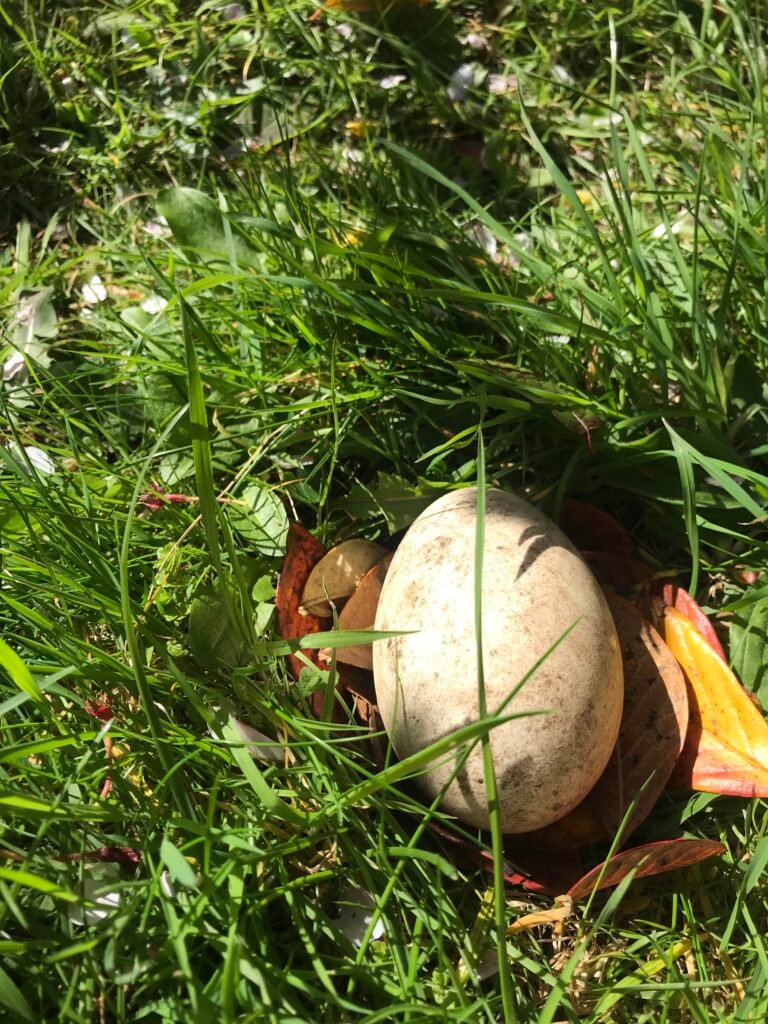
Growth and change is not easy. If you’ve seen a chick picking its way out of an egg, a butterfly emerging from the chrysalis, or a snake sloughing off its skin you know that perseverance is vital…samsara with just a sprinkling of dharma doesn’t taste too good and is not sustaining.
A student may be keen for a while, even very appreciative of the teachings, however the winds of karma blow and off they go.The teacher cannot hold on to them, they themselves have to do the holding on until the view becomes not ‘second nature’ but first nature. Progress is not necessarily onwards and upwards. There is hope that students will study, reflect and practice — that they will respect the Dharma and the efforts of teachers who for thousands of years have studied practised and made many sacrifices to maintain the continuity of the teachings but they may not. So teaching also helps the teacher with the development of equanimity. Thank you if you have contributed to that somewhat uncomfortable process!
We are lucky to have James’ advice and I had a chat with him about the way forward for the group this year. The thinking is to give a short (15 mins) talk, meditation for half an hour and then study maybe fifteen lines of the Dhammapada. We’ll see how it goes.
As always, if there are issues which you would like to discuss outside of the class i am happy to talk on the phone or meet up with you and have a chat.
best wishes….
Wendy
Well…. perfectly! Surely that is obvious.
But what do you mean by ‘perfectly’?
Well… perfectly… according to the rulebook in my head.
But if the teacher shares your rulebook you might not learn very much from them. As my teacher’s teacher told him — ‘the buddha is not a “nice man”.’
Awakening to the unborn natural state or ‘buddha nature’ results in a change of operating system…no longer standing apart and judging with a dualistic perspective but responding to dynamic situations with freshness and attunement.
A good teacher acts to wake us up to our attachment to the illusory nature of the fixed patterns we use to create the duality of samsaric existence. Some will even be kind enough to continue to point out that our shoes are far too tight until we wake up and feel the pain of our blisters, callouses and corms. At the same time they remind us that our feet are naturally beautiful and, with the right kind of dharma massage, these corms and blisters will become wings. Then we will work at freeing ourselves from these shoes and discover the pleasure of walking barefoot and moving through space in different ways!
Depending on your condition these may be the kindest teachers of all, but sometimes they may seem unpleasant. We want them to appreciate our lovely shiny shoes and sympathise with our limp however whilst they see our view they do not share it — they see beyond our felt limitations.
On the other hand a teacher may be just being rather unpleasant; karmic winds can shift a teachers behaviours, so this is something to look at — can we learn something by engaging with this person as they are and as we feel uncomfortable?
The ego will not readily choose to engage in a struggle where it feels its existence to be threatened but in dharma practice we are engaged in a process of softening and becoming undefended, allowing the ego to be what it is, just an aspect of our awareness, relaxing to the point where this awareness is revealed to us.
There is more on this theme, and about the relationship between teachers and students in chapter 15 – The Transmission of the Dharma — in the book Simply Being by James Low. It is important to try to have a sense of this relationship so please let me know if you have any questions.
I’d also be delighted to hear from you when you have read the preceding chapter, on refuge and bodhicitta…we can formalise taking the taking of refuge and bodhicitta vows if you would like…and discuss any questions which arise.
We were talking the other night and I thought that these two recordings— 3A and 3B from Balancing relaxation and effort in Buddhism were just on the point.
Meditation practice day… devised in collaboration with James Low
From 9.45 for 10.00am start London time until 4.05 pm
Dzogchen and Buddhist Teachings of James Low
assumptions Audio-book Being Right Here dependant co-origination Dhammapada dharma teacher Emerson College emptiness equanimity impermanence Introduction to Sharp Weapon Wheel James Low Longing for Limitless Light Lotus Source Recordings Open to Life – the heart of awareness publications Simply Being student-teacher relationship The Open Door of Emptiness THIS IS IT